


Temet Nosce - Know Thyself Wood Sign 1
Temet Nosce - Know Thyself Wood Sign 1
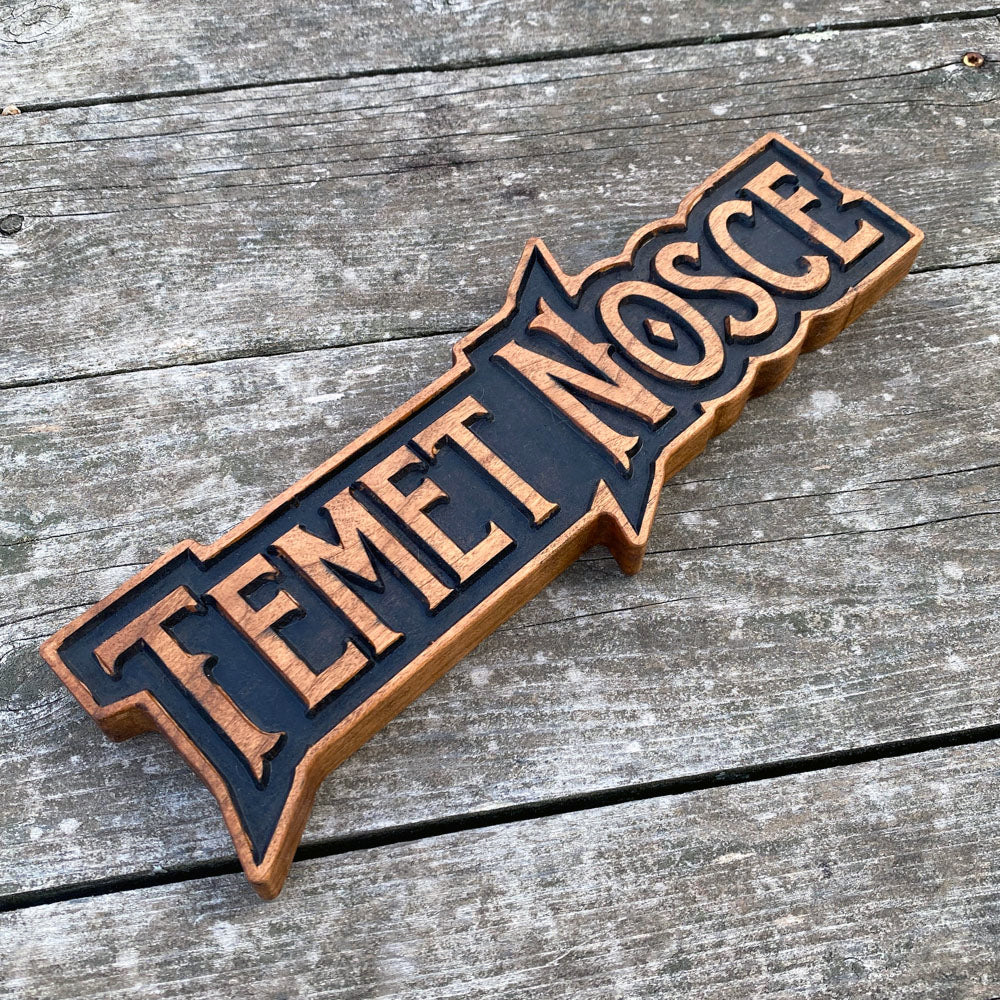
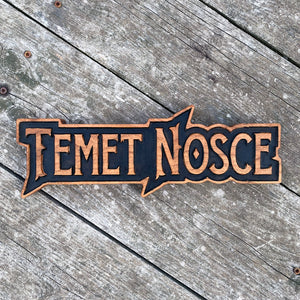
As the Oracle says, you must first know yourself. "Temet Nosce" — translated as "Know Thyself" — is a philosophical maxim inscribed above the Temple of Apollo at Delphi over 2,000 years ago. More recently, it appeared above a kitchen door in a computer-generated world run by crazy AI in need of fresh batteries. This precision-carved Temet Nosce - Know Thyself Wood Sign 1 is crafted from solid cherry wood, hand-sanded smooth, and hand-stained with True Black and Early American stain from MinWax for a rich, warm finish that looks great above any door — especially the kitchen. For philosophers, Matrix fans, and anyone still working on becoming The One, this sign is for you. Missouri Made.
- Measures approximately 4.5" tall and 11.75" wide.
- Crafted from .8" thick solid Cherry.
- Hand sanded and finished.
- Hand stained with True Black and Early American stain from MinWax.
- Made in USA!
- #MissouriMade

Temet Nosce - Know Thyself Wood Sign 1